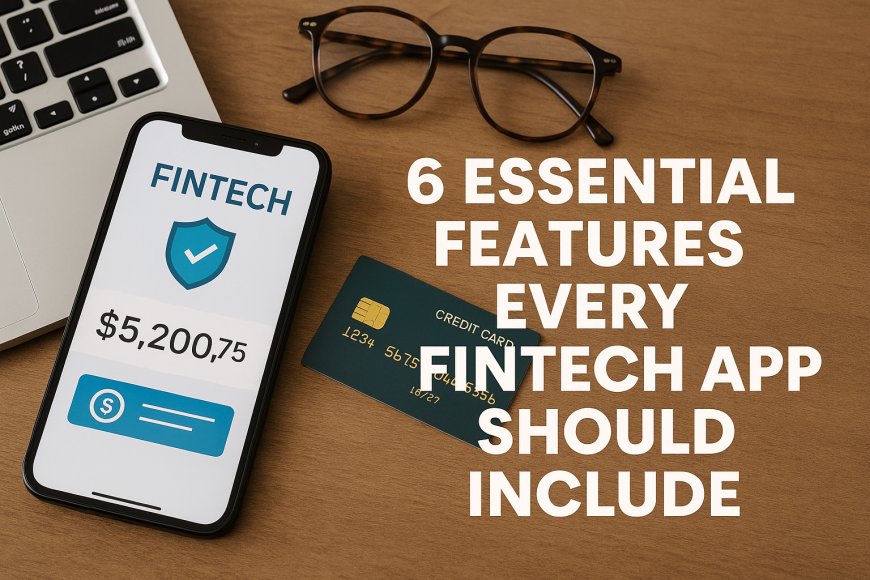
6 Essential Features Every Fintech App Should Include
The financial technology (Fintech) sector is rapidly transforming how individuals and businesses manage their money, invest, and access financial services. Mobile apps are at the forefront of this revolution, offering unparalleled convenience, speed, and personalized experiences. However, building a successful Fintech app is complex; it requires a delicate balance of robust security, seamless user experience, and innovative features that genuinely add value. For any Mobile App Development Company venturing into this highly regulated and competitive space, understanding the non-negotiable features is critical to gaining user trust and achieving market traction.
A Fintech app's failure can have severe consequences, ranging from financial losses for users to irreparable damage to the company's reputation. Therefore, meticulous attention to security, compliance, and user-centric design is paramount. The features discussed below are not just desirable; they are foundational to building a secure, reliable, and engaging Fintech application that stands out in a crowded market.
Here are 6 essential features every Fintech app should include:
1. Robust Security and Authentication
In the realm of finance, security is not a feature; it's the bedrock. Any compromise in security can lead to catastrophic losses, legal repercussions, and complete erosion of user trust.
- Why it's Essential: Fintech apps handle sensitive personal and financial data. Users entrust their money and private information to these platforms. A single security breach can devastate a user's finances and destroy a brand's reputation permanently.
- Key Components:
- Multi-Factor Authentication (MFA): Beyond just a password, MFA requires users to verify their identity through at least two different methods (e.g., password + SMS code, password + biometric scan, password + authentication app). This significantly enhances security against unauthorized access.
- Biometric Authentication: Integration of fingerprint (Touch ID) and facial recognition (Face ID) for quick, secure, and convenient logins and transaction authorizations. This balances security with ease of use.
- Data Encryption: All data, both in transit (using HTTPS/SSL/TLS protocols) and at rest (on servers and user devices), must be encrypted using strong, industry-standard algorithms. This protects data from interception and unauthorized access.
- Fraud Detection Systems: Implement AI-powered real-time fraud detection that analyzes transaction patterns and flags suspicious activities for immediate review or blocking.
- Session Management: Secure session handling that automatically logs users out after a period of inactivity and prevents session hijacking.
- Compliance with Regulations: Adherence to relevant financial regulations and data protection laws (e.g., GDPR, PCI DSS, local financial regulations) is non-negotiable.
- Penetration Testing & Security Audits: Regular, rigorous security audits and penetration testing by independent experts to identify and patch vulnerabilities before they can be exploited.
- Benefit for the App: Builds immediate user trust, which is the most valuable currency in Fintech. Protects both the users and the company from financial crime and reputational damage. A Mobile App Development Company specializing in Fintech must make security its top priority.
2. Intuitive User Interface (UI) and Seamless User Experience (UX)
Fintech often involves complex financial concepts and operations. The app's design must simplify this complexity, making financial management accessible to everyone.
- Why it's Essential: Users, especially those new to digital finance, can be intimidated by complex financial jargon or convoluted processes. A confusing interface leads to frustration, high abandonment rates, and a negative perception of the app and the brand. Simplicity and clarity are paramount.
- Key Components:
- Clean and Minimalist Design: Avoid clutter. Present information clearly and concisely, focusing on essential data.
- Streamlined Onboarding: A quick, easy, and informative onboarding process that guides new users through setup without overwhelming them. Show immediate value.
- Clear Navigation: Intuitive navigation menus and clear calls-to-action that allow users to easily find features and complete tasks.
- Visual Data Representation: Use charts, graphs, and infographics to visualize financial data (spending habits, investment performance) rather than just raw numbers. This makes complex information digestible.
- Consistent Design Language: Maintain a consistent look, feel, and interaction pattern across all screens and features to enhance learnability and usability.
- Feedback and Confirmation: Provide immediate visual and haptic feedback for user actions and clear confirmation messages for transactions.
- Benefit for the App: Reduces friction, lowers the learning curve, and makes financial management enjoyable rather than a chore. This directly leads to higher user engagement, satisfaction, and retention.
3. Real-Time Transaction Notifications and History
Transparency and immediate feedback are crucial for building user confidence and control over their finances.
- Why it's Essential: Users need to know exactly what's happening with their money at all times. Delayed or incomplete information can lead to anxiety, distrust, and difficulty in managing finances effectively. Immediate notifications also serve as a critical fraud alert mechanism.
- Key Components:
- Instant Push Notifications: Alerts for every transaction (deposits, withdrawals, payments, transfers, suspicious activity). Users should have granular control over notification preferences.
- Comprehensive Transaction History: An easily accessible, filterable, and searchable record of all financial activities within the app. Each entry should include clear details like date, time, amount, recipient/sender, and transaction type.
- Categorization and Tagging: Tools to automatically or manually categorize transactions (e.g., groceries, transport, utilities, entertainment) to help users understand their spending patterns.
- Pending Transactions: Clear display of pending transactions and their expected completion times.
- Benefit for the App: Enhances user control and peace of mind. Provides valuable insights for personal financial management and acts as an early warning system for potential fraud, reinforcing security.
4. Personalized Financial Insights and Budgeting Tools
Moving beyond basic transaction viewing, modern Fintech apps empower users with actionable intelligence about their money.
- Why it's Essential: Users are increasingly looking for apps that don't just facilitate transactions but actively help them improve their financial well-being. Generic advice is ineffective; personalized insights based on their actual spending and saving habits are invaluable.
- Key Components:
- Automated Budgeting: Tools that allow users to set budgets for different categories and track their spending against those budgets in real-time. Automatic alerts when approaching or exceeding limits.
- Spending Analytics: Visual summaries and detailed breakdowns of spending by category, merchant, or time period, often leveraging AI to identify trends.
- Goal Setting & Tracking: Features to set financial goals (e.g., saving for a down payment, debt repayment) and track progress towards them.
- Personalized Recommendations: AI-driven suggestions for saving money, optimizing investments, or identifying recurring subscriptions based on individual financial behavior.
- Net Worth Tracking: Aggregation of all financial accounts (bank accounts, investments, loans) to provide a holistic view of a user's financial health.
- Bill Reminders: Automated reminders for upcoming bill payments to avoid late fees.
- Benefit for the App: Transforms the app from a mere transactional tool into a personal financial advisor. This deepens user engagement, provides tangible value, and fosters long-term loyalty by actively helping users achieve their financial objectives.
5. Seamless Integration with Other Financial Services
A truly comprehensive Fintech experience often requires interoperability with other financial institutions and third-party services.
- Why it's Essential: Users rarely use just one financial product. They have bank accounts, credit cards, investment portfolios, and potentially other payment apps. An app that can integrate these disparate elements creates a powerful, unified financial hub, increasing convenience and stickiness.
- Key Components:
- Open Banking APIs: Secure integration with banks and other financial institutions (with user consent) to pull transaction data, account balances, and facilitate transfers. This often involves adherence to open banking standards.
- Payment Gateway Integration: Secure and reliable integration with various payment gateways (e.g., Stripe, PayPal, local payment processors) to facilitate seamless money transfers, payments, and receipt of funds.
- Third-Party App Integration: Connections with other popular financial tools (e.g., accounting software for businesses, budgeting apps, investment platforms) if relevant to the app's niche.
- QR Code / NFC Payments: For apps that facilitate in-person transactions, integrating QR code scanning or Near Field Communication (NFC) for quick and secure payments.
- Benefit for the App: Creates a more holistic and convenient financial ecosystem for the user, reducing the need to switch between multiple apps. This enhances the app's utility and competitive advantage. For a Mobile App Development Company, successful integration demonstrates technical prowess and adherence to industry standards.
6. Robust Customer Support and Dispute Resolution
Even with the most intuitive design, users will occasionally need assistance or encounter issues. Reliable support builds trust and confidence.
- Why it's Essential: Financial matters are highly sensitive. When users have questions, encounter a problem, or suspect an error, they need immediate, trustworthy, and efficient support. Poor customer service can quickly erode trust, leading to user churn and negative reviews.
- Key Components:
- In-App Chat/Messaging: Real-time chat support directly within the app, ideally with AI chatbots for instant answers to common queries and seamless handover to human agents for complex issues.
- Comprehensive FAQ Section: A searchable, well-organized knowledge base within the app that addresses common questions and provides step-by-step guides.
- Easy Contact Options: Clear access to phone numbers, email support, and physical addresses (if applicable) for alternative contact methods.
- Dispute Resolution Process: A clear, transparent, and user-friendly process for reporting and resolving transaction disputes or other issues.
- Personalized Support: Ability for support agents to access relevant user context (with consent) to provide more efficient and tailored assistance.
- Multi-Language Support: If targeting a diverse user base, offer support in multiple languages.
- Benefit for the App: Provides a safety net for users, assuring them that help is available when needed. Excellent support transforms potential frustrations into positive experiences, strengthening user loyalty and brand reputation.
Conclusion
Building a successful Fintech app in today's dynamic market is a multifaceted challenge that demands a blend of technical expertise, regulatory compliance, and a profound understanding of user needs. For any Mobile App Development Company aiming to make a significant impact in the financial technology sector, integrating these six essential features is non-negotiable. From ironclad security and intuitive design to real-time insights and robust customer support, these elements collectively build the trust, convenience, and value that modern users expect from their financial applications. By prioritizing these foundational features, developers can create Fintech apps that not only attract users but also empower them to manage their financial lives with greater confidence and efficiency, ultimately driving sustainable growth and success.