






























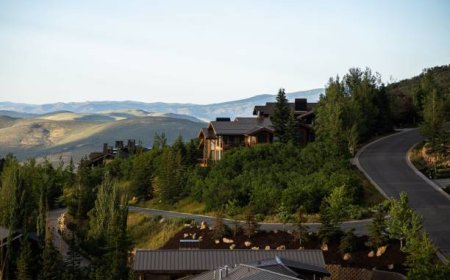



How to Hike Long Ridge Open Space from San Jose
How to Hike Long Ridge Open Space from San Jose Long Ridge Open Space is one of the most rewarding and underrated natural escapes in the Santa Cruz Mountains, just a short drive from downtown San Jose. Spanning over 1,500 acres of protected land, this expansive trail network offers panoramic views of the Bay Area, diverse ecosystems, and a rare opportunity to experience wild California without tra

How to Hike Long Ridge Open Space from San Jose
Long Ridge Open Space is one of the most rewarding and underrated natural escapes in the Santa Cruz Mountains, just a short drive from downtown San Jose. Spanning over 1,500 acres of protected land, this expansive trail network offers panoramic views of the Bay Area, diverse ecosystems, and a rare opportunity to experience wild California without traveling far from urban centers. Whether youre a seasoned hiker seeking solitude or a beginner looking to explore nature on foot, Long Ridge Open Space delivers a uniquely immersive experience. Unlike crowded regional parks, Long Ridge remains relatively underdeveloped, preserving its raw beauty and quiet ambiance. This guide provides a comprehensive, step-by-step walkthrough on how to hike Long Ridge Open Space from San Jose including route planning, trail etiquette, gear recommendations, real-world examples, and essential FAQs to ensure a safe, enjoyable, and memorable outing.
Step-by-Step Guide
1. Plan Your Route Before You Leave
Long Ridge Open Space is not a single trail but a complex network of interconnected paths managed by the Midpeninsula Regional Open Space District. The most popular and accessible starting point for hikers from San Jose is the Long Ridge Trailhead, located off Skyline Boulevard (Highway 35). Before setting out, determine your desired loop or out-and-back route. For beginners, a 34 mile loop via the Long Ridge Trail and the Ridge Trail is ideal. More experienced hikers may opt for the full 79 mile circuit that includes the Bonita Canyon Trail and the Dripping Springs Trail.
Use digital mapping tools like AllTrails, Gaia GPS, or the official Open Space District map to visualize trail connections. Print a physical copy or download an offline map cell service is unreliable in the hills. Always confirm trail conditions: some paths may be closed due to erosion, fire damage, or wildlife activity. Check the Midpeninsula Regional Open Space District website for real-time updates before departure.
2. Choose the Right Starting Point
From San Jose, the most efficient route to the Long Ridge Trailhead is via US-101 North to CA-85 North, then merging onto CA-35 (Skyline Boulevard). The trailhead parking lot is located at approximately mile marker 12.5 on Skyline, just north of the Bonita Canyon entrance. GPS coordinates: 37.2892 N, 122.1124 W.
There are two main parking options:
- Primary Lot: A gravel pull-off on the east side of Skyline Boulevard, marked by a small sign reading Long Ridge Open Space. This lot accommodates 1012 vehicles. Arrive early on weekends it fills quickly.
- Alternate Parking: If the primary lot is full, continue north for 0.3 miles to the Bonita Canyon trailhead parking. From there, follow the Bonita Canyon Trail south for 0.7 miles to connect with the Long Ridge Trail. This adds minimal distance but ensures you can still begin your hike.
Never park on the shoulder of Skyline Boulevard. Its dangerous, illegal, and can result in a citation or towing.
3. Prepare Your Gear Appropriately
Even on mild days, conditions on Long Ridge can change rapidly. Layering is essential. Wear moisture-wicking base layers, a lightweight windbreaker, and sturdy hiking boots with ankle support. The trail surface includes loose gravel, exposed roots, and steep, rocky sections trail runners are not recommended.
Essential gear includes:
- At least 2 liters of water per person (no reliable water sources on the trail)
- Electrolyte tablets or snacks high in energy (nuts, dried fruit, energy bars)
- Full sun protection: hat, sunglasses, and SPF 30+ sunscreen
- First aid kit with blister treatment, antiseptic wipes, and tweezers
- Whistle and emergency blanket (in case of injury or getting lost)
- Fully charged phone with offline maps and a portable power bank
Do not rely on your phone for navigation. GPS signals are inconsistent, and cellular reception drops out frequently. A physical map and compass are still valuable tools.
4. Begin Your Hike: The Long Ridge Trail
From the parking lot, locate the trailhead sign marked Long Ridge Trail. The initial 0.2 miles ascend gently through mixed oak woodland, with scattered madrone and bay laurel trees. Watch for signs of wildlife deer tracks, acorn caches, and the occasional black-tailed jackrabbit. The trail is wide and well-maintained at this point, making it ideal for easing into your hike.
At 0.5 miles, youll reach a junction with the Ridge Trail. Turn left (north) onto the Ridge Trail. This is where the real ascent begins. The trail narrows, climbs more steeply, and opens to sweeping views of the Santa Clara Valley below. On clear days, you can see downtown San Jose, the Dumbarton Bridge, and even the distant outline of Mount Tamalpais.
At 1.2 miles, youll pass a bench with a view marker. This is a perfect spot to pause, hydrate, and take in the panorama. Continue north for another 0.8 miles until you reach the intersection with the Bonita Canyon Trail. Here, turn right (west) to begin the loop.
5. Navigate the Loop: Bonita Canyon and Dripping Springs
The Bonita Canyon Trail descends gently through a shaded canyon filled with ferns, moss-covered boulders, and seasonal wildflowers. In spring, the area blooms with lupine, goldfields, and California poppies. The trail surface is rocky but manageable. Watch for poison oak it grows abundantly along the edges. Learn to identify it: Leaves of three, let it be.
At 2.1 miles from the start, the Bonita Canyon Trail connects with the Dripping Springs Trail. Turn left (north) onto this trail. It climbs steadily through chaparral and offers intermittent views of the San Andreas Fault line. The trail is narrower here, with exposed roots and loose scree. Use trekking poles if you have them they significantly reduce knee strain on descents.
At 3.0 miles, the Dripping Springs Trail rejoins the Ridge Trail. Turn right (east) to return to your starting point. The final 1.2 miles descend back along the Ridge Trail, offering a final stretch of open ridgeline views. The trail becomes more gradual, allowing you to recover your energy. Be cautious in the last 0.3 miles the descent near the parking lot is steep and can be slippery after rain.
6. Complete Your Hike and Leave No Trace
Upon returning to your vehicle, take a moment to reflect on your journey. Before leaving, perform a final check:
- Collect all trash including food wrappers, fruit peels, and tissue paper
- Ensure no gear is left behind hats, gloves, or water bottles are commonly forgotten
- Check your clothing and boots for ticks they are common in grassy areas
- Report any trail damage, hazardous conditions, or illegal activity to the Open Space District via their website
Leave the trail exactly as you found it. This preserves the natural environment for future visitors and protects fragile ecosystems.
Best Practices
1. Hike During Off-Peak Hours
Weekends, especially sunny ones, draw large crowds to Long Ridge. To experience the tranquility this space was designed for, aim to arrive before 8 a.m. on weekends or hike on weekdays. Early mornings offer cooler temperatures, better light for photography, and fewer encounters with other hikers. Youll also have a higher chance of spotting wildlife coyotes, bobcats, and even the elusive mountain lion are occasionally seen at dawn.
2. Respect Wildlife and Vegetation
Long Ridge Open Space is home to over 200 species of birds, 30+ mammal species, and dozens of native plant communities. Never feed animals. Even seemingly harmless interactions tossing a piece of apple to a squirrel can disrupt natural foraging behaviors and make wildlife dependent on humans. Keep a safe distance from all animals. If you encounter a deer, step off the trail and wait for it to pass. Do not approach or attempt to photograph wildlife with a zoom lens from less than 50 feet.
Stay on designated trails. Straying off-trail damages sensitive soil, compacts earth, and destroys native plant roots. Erosion caused by unauthorized paths can take decades to heal.
3. Prepare for Weather Variability
The Santa Cruz Mountains are known for microclimates. It may be sunny and 75F in San Jose, but 10F cooler and foggy on the ridge. Always carry a lightweight rain shell, even if the forecast is clear. Afternoon fog rolls in rapidly, reducing visibility and increasing the risk of slipping on wet rocks. In winter, trails can become muddy and slick waterproof boots are essential.
Temperatures rarely drop below freezing, but wind chill on the exposed ridge can make it feel colder. Layering with a thermal base, fleece mid-layer, and windproof outer shell is the most effective strategy.
4. Practice Silent Hiking
One of the greatest gifts Long Ridge offers is peace. Turn off your music, lower your voice, and listen. Youll hear the rustle of leaves, the distant call of a red-tailed hawk, the crunch of gravel underfoot. Silent hiking enhances mindfulness and deepens your connection to the landscape. It also increases your chances of observing wildlife in their natural state.
5. Hike with a Buddy
While Long Ridge is generally safe, solo hiking carries inherent risks. Inform someone of your planned route and expected return time. Carry a whistle three blasts signal distress. If youre hiking alone, stick to well-traveled routes and avoid hiking after dark. Emergency response times can be slow in remote areas.
6. Know Your Limits
Long Ridge is not a beginner-friendly trail for those completely new to hiking. The elevation gain is approximately 1,200 feet over 6 miles, with sustained steep sections. If youre out of shape, start with shorter loops like the 2-mile out-and-back on the Long Ridge Trail alone. Build endurance gradually. Rest when needed. Hydration and pacing are more important than speed.
Tools and Resources
1. Official Trail Maps
The Midpeninsula Regional Open Space District provides free, downloadable trail maps for Long Ridge Open Space. Visit openspace.org and navigate to Parks & Trails > Long Ridge Open Space. The interactive map includes trail lengths, elevation profiles, parking locations, and seasonal closures. Print a copy or save it to your device for offline use.
2. Mobile Apps for Navigation
While cell service is spotty, offline GPS apps are invaluable:
- AllTrails: Download the Long Ridge Loop route as a GPX file. The app shows your real-time location even without signal.
- Gaia GPS: Offers topographic layers, elevation data, and satellite imagery ideal for route planning and emergency orientation.
- Google Maps (Offline): Save the area around Skyline Blvd and Long Ridge Trailhead as an offline map. It wont show trails, but it helps with road navigation.
3. Weather and Air Quality Tools
Check conditions before departure:
- NOAA Forecast: Use the Santa Cruz Mountains forecast zone for accurate microclimate predictions.
- AirNow.gov: Monitor air quality, especially during wildfire season. Smoke can reduce visibility and make breathing difficult.
- Windy.com: Shows wind speed and direction on the ridge strong gusts are common and can affect balance on narrow paths.
4. Trail Condition Reports
Check for recent trail updates:
- Open Space Districts Trail Alerts Page
- Local hiking forums like Bay Area Hikers on Facebook
- Instagram hashtags:
LongRidgeHike, #LongRidgeOpenSpace
Recent hikers often post photos showing muddy sections, downed trees, or trail markers that have been knocked over. These real-time updates are more reliable than static maps.
5. Educational Resources
Deepen your understanding of the environment:
- Plants of the Santa Cruz Mountains by Michael Kudish a field guide to native flora
- Birds of California by Sibley identify raptors, warblers, and woodpeckers you encounter
- Open Space Districts Nature Talks free monthly guided walks led by naturalists (register online)
6. Emergency Contacts and Safety
In case of emergency:
- Call 911 provide your location using GPS coordinates from your app or describe landmarks (e.g., near the third switchback on Ridge Trail, 0.2 miles from the Bonita Canyon junction)
- Text your location to a trusted contact using Apples Share My Location or Google Maps location sharing
- Carry a personal locator beacon (PLB) if hiking in remote areas frequently
Always carry a whistle. Three short blasts is the universal distress signal recognized by search and rescue teams.
Real Examples
Example 1: The Weekend Family Hike
Julia and Mark, residents of Campbell, brought their two children (ages 8 and 11) to Long Ridge on a Saturday morning. They arrived at 7:30 a.m. and parked in the primary lot. Their goal: a 3-mile loop with minimal elevation gain.
They followed the Long Ridge Trail to the Ridge Trail junction, then turned right and hiked 0.8 miles to the viewpoint bench. After a snack and water break, they returned the same way. Total time: 2.5 hours. The children enjoyed spotting acorns and identifying bird calls using a free app called Merlin Bird ID. They saw a red-tailed hawk circling overhead and a gopher snake sunning itself on a rock a highlight of the trip.
Key takeaways: Start early, keep the route short, bring engaging tools (bird app, magnifying glass), and reward kids with a picnic at the car afterward.
Example 2: The Solo Trail Runner
Diego, a 32-year-old software engineer from San Jose, uses Long Ridge as his weekly endurance training ground. He runs the full 7.5-mile loop on Wednesday mornings, arriving at 6 a.m. He wears trail shoes with aggressive lugs, carries 1.5 liters of water, and uses a GPS watch with offline mapping.
He logs his route on Strava and often sees deer grazing at the trails edge. On one occasion, he encountered a bobcat 30 feet away. He stopped, backed away slowly, and waited until it disappeared into the brush. He says, The solitude here is therapeutic. I dont hear a single car for the entire 90 minutes.
Key takeaways: Solo runners should carry a phone, know the trail intimately, and avoid headphones. Always leave a note with your route and return time.
Example 3: The Photography Expedition
Lena, a landscape photographer from Palo Alto, visited Long Ridge at golden hour on a late autumn day. She arrived at 4:30 p.m., hiking the Ridge Trail to the high point at 5:15 p.m. The fog had lifted, revealing a breathtaking view of the valley bathed in amber light.
She used a tripod, neutral density filter, and wide-angle lens to capture the sweeping panorama. She stayed until sunset, then hiked back under headlamp. She captured images of the silhouetted oaks, the distant city lights of San Jose, and the first stars appearing over the ridge.
Key takeaways: Bring extra batteries (cold drains them faster), use a red-light headlamp to preserve night vision, and plan your visit around sunrise or sunset.
Example 4: The First-Time Hikers Challenge
Maya, a 45-year-old teacher from San Jose, had never hiked more than a mile before. She joined a free Beginner Hiking class offered by the Open Space District. The group met at Long Ridge Trailhead and hiked the 2.5-mile loop with a naturalist guide.
She learned how to identify poison oak, read trail markers, and use trekking poles. She was surprised by how steep the trail felt and how rewarding the view was at the top. I didnt know I could feel so calm just walking, she said afterward.
Key takeaways: Join guided hikes to build confidence. Dont compare your pace to others. Progress, not perfection, is the goal.
FAQs
Is Long Ridge Open Space open year-round?
Yes, Long Ridge Open Space is open daily from sunrise to sunset. Trails may close temporarily due to heavy rain, fire risk, or wildlife protection efforts. Always check the official website before heading out.
Are dogs allowed on the trails?
No. Dogs are not permitted in Long Ridge Open Space to protect native wildlife and prevent disturbance to sensitive habitats. Service animals are allowed but must remain on a leash and under control at all times.
Can I camp or have a fire at Long Ridge?
No. Camping, open fires, and charcoal grills are strictly prohibited. The area is designated for day use only. Pack out everything you bring in.
Is there cell service on the trail?
Spotty at best. You may get a signal near the trailhead or at the highest ridge points, but most of the trail has no reception. Do not rely on your phone for navigation or emergencies. Carry a map and whistle.
How long does it take to hike Long Ridge Open Space?
It depends on your route and pace. A 3-mile loop takes 1.52 hours. The full 7.5-mile loop takes 45 hours. Add extra time for breaks, photos, and wildlife observation.
Are there restrooms at the trailhead?
No. There are no restrooms or water fountains on the trail. Plan accordingly use the restroom before arriving, and carry all necessary supplies.
Is Long Ridge Open Space safe for solo hikers?
Yes, if youre prepared. The trails are well-used and generally safe. However, always inform someone of your plans, carry emergency gear, and avoid hiking after dark. Stick to marked trails and trust your instincts.
Whats the best season to hike Long Ridge?
Spring (MarchMay) offers the most vibrant wildflowers and moderate temperatures. Fall (SeptemberNovember) provides crisp air, clear skies, and fewer crowds. Summer can be foggy and cool on the ridge, even if its hot in the valley. Winter brings rain and mud boots are essential.
Can I bike or bring a stroller on the trails?
No. Long Ridge Open Space trails are for foot traffic only. Bikes and strollers are not permitted. The terrain is too steep, rocky, and narrow to accommodate wheeled vehicles.
How do I report a trail hazard or illegal activity?
Contact the Midpeninsula Regional Open Space District at openspace.org/contact or call (650) 691-1200. Provide the trail name, location, and a description of the issue. Photos are helpful but not required.
Conclusion
Hiking Long Ridge Open Space from San Jose is more than a physical activity its a gateway to quiet reflection, natural wonder, and a deeper connection with the land that surrounds our urban lives. This trail system, often overlooked in favor of more famous destinations like Muir Woods or Big Basin, offers a rare blend of accessibility, beauty, and serenity. With proper preparation, respect for the environment, and a willingness to slow down, youll discover why locals consider Long Ridge one of the Bay Areas best-kept secrets.
Whether youre a family seeking a gentle morning walk, a solo runner chasing solitude, or a photographer chasing the perfect light, Long Ridge delivers. The ridge doesnt shout it whispers. And if you listen closely, youll hear the wind through the oaks, the distant cry of a hawk, and the rhythm of your own breath, in harmony with the earth.
So lace up your boots, pack your water, and head north on Skyline. The trail is waiting.