































Understanding GD&T: The Language of Precision in Modern Manufacturing
Discover what GD&T is, how it enhances precision in manufacturing, and why it’s vital for CNC machining. Learn the symbols, benefits, and real-world applications of Geometric Dimensioning and Tolerancing.
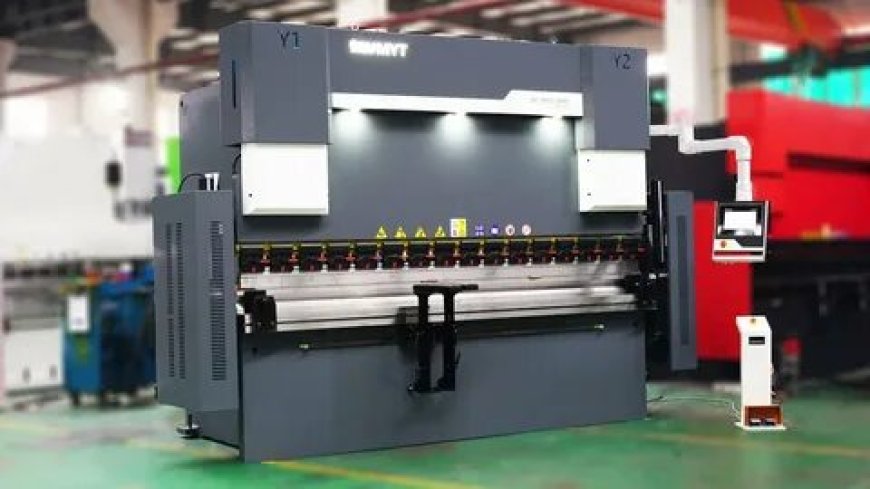
In todays advanced manufacturing environment, accuracy and consistency are critical to delivering parts that meet specifications. To achieve this, engineers and machinists rely on a powerful symbolic language known as Geometric Dimensioning and Tolerancing (GD&T). For those unfamiliar with this essential tool, it's important to understand what is gd&t and how it plays a vital role in precision machining.
This article explores the fundamentals of GD&T, how it's used in engineering design and CNC machining, and why it's an indispensable tool for ensuring part quality and functional fit across industries.
What is GD&T?
Geometric Dimensioning and Tolerancing (GD&T) is a standardized system used to define and communicate engineering tolerances. Rather than relying solely on numerical dimensions and notes, GD&T uses a set of symbolic notations placed on engineering drawings to describe the allowable variation in a parts geometry. These symbols define the shape, orientation, and relationship of features such as holes, slots, surfaces, and axes.
The system ensures that everyonedesigners, manufacturers, and quality inspectorsinterprets the drawing in the same way, reducing the chance of miscommunication and costly errors.
Why is GD&T Important in CNC Machining?
In precision manufacturing, especially in CNC machining, even the smallest variation can compromise the functionality or assembly of a part. GD&T addresses this by specifying:
-
Where a feature must be,
-
How much deviation is acceptable,
-
What reference datums control the measurements.
This allows manufacturers to produce interchangeable parts, maintain high levels of quality, and reduce waste due to rework or inspection failures.
For example, when producing parts that must fit together, such as mating gears or engine components, GD&T ensures that all pieces align as intendedeven when they are made in different factories or on different machines.
Core Concepts of GD&T
Understanding GD&T begins with its key elements:
1. Symbols and Feature Control Frames
GD&T uses a symbolic language governed by standards like ASME Y14.5. Each symbol represents a different type of geometric control, such as flatness, perpendicularity, or concentricity. These symbols are placed inside a Feature Control Frame (FCF) that defines the tolerance zone and reference datums.
2. Datums
Datums are theoretical, perfect planes or points that serve as references for measuring other features. Establishing datums creates a frame of reference that remains consistent across design, machining, and inspection processes.
3. Tolerance Zones
Each GD&T symbol includes a tolerance value, which defines the acceptable variation for that feature. These tolerance zones can be:
-
Linear (e.g., within 0.1mm)
-
Angular (e.g., within 0.5)
-
Cylindrical or rectangular, depending on the control type
GD&T ensures that as long as a feature stays within the specified tolerance zone, it will meet design intent.
Common GD&T Symbols and Their Meanings
Here are some frequently used GD&T symbols and what they represent:
| Symbol | Control Type | Purpose |
|---|---|---|
| ? | Flatness | Ensures surface is uniformly flat |
| ? | Position | Controls location of features |
| ? | Total Runout | Controls variation when rotating |
| ? | Circularity | Controls roundness of a part |
| ? | Maximum Material Condition (MMC) | Optimizes inspection and manufacturing |
These symbols allow for greater precision in defining how a feature should behave rather than just where it should be.
Benefits of Using GD&T
1. Improved Communication Across Teams
GD&T provides a clear and universally accepted way of describing design intent. This minimizes misunderstandings between designers, machinists, and inspectors.
2. Tighter Quality Control
By defining acceptable variations, GD&T supports better inspection standards. CMMs (Coordinate Measuring Machines) and other advanced tools can directly interpret GD&T symbols to verify parts against design specs.
3. Cost Savings
While GD&T might seem complex initially, its proper application can reduce rework, scrap, and production delaysultimately saving money and resources.
4. Better Functional Fit
Parts manufactured with GD&T are more likely to assemble correctly and perform as expected, even if made by different vendors or across production runs.
GD&T vs. Traditional Tolerancing
Traditional tolerancing methods rely on simple tolerances. While this works for many basic parts, it can be overly restrictive or too loose for complex geometries.
GD&T, on the other hand:
-
Allows more flexibility in some dimensions
-
Focuses on function over form
-
Accounts for interactions between different features
For example, a hole that must align with a shaft can have a positional tolerance that allows for minor shifts without affecting functionsomething not easily expressed with dimensions.
How to Read and Apply GD&T in Practice
For professionals in the machining industry, interpreting GD&T is an essential skill. Here are some tips:
-
Study the GD&T symbols and understand what each one means.
-
Start with datums, as they are the reference points for most controls.
-
Use CAD/CAM software that supports GD&T integration.
-
Refer to standards like ASME Y14.5 for proper application.
-
Collaborate with designers and inspectors to ensure consistent interpretation.
Its also helpful to receive formal training or certification in GD&T, especially for those involved in quality assurance or CNC programming.
Industries that Rely on GD&T
GD&T is widely used in industries where high precision and repeatability are essential:
-
Aerospace: For components like turbine blades, fuselage panels, and avionics housings.
-
Automotive: To ensure proper fit between engines, gearboxes, and structural parts.
-
Medical Devices: For components such as implants and surgical tools.
-
Defense and Military: For weapons systems and armored vehicle components.
-
Electronics: For enclosures, connectors, and heat sinks.
These industries depend on GD&T to maintain performance, safety, and reliability.
Final Thoughts
Understanding GD&T is more than just learning a set of symbolsits about embracing a method that enhances precision, communication, and quality throughout the manufacturing process. From initial design to final inspection, GD&T acts as a universal language that ensures every stakeholderfrom engineers to machinistsis aligned on the products requirements.
Whether youre a seasoned CNC professional or just beginning your engineering journey, mastering GD&T is a step toward delivering parts that not only meet expectations but exceed them.